Showing posts with label Food - Drink. Show all posts

Thang Co - a speciality in Hagiang

By  
Visitors to the northern mountainous region, particularly Ha Giang province, will be treated to a special local dish of the Mong ethnic people called Thắng cố. 

Thang Co - a speciality in Hagiang

The dish is traditionally made from horse meat, including almost all the offal such as intestines, liver, and kidneys, but beef and pork may also be used.

Thang Co - a speciality in Hagiang1

The meat and offal are cut into small pieces and mixed with special spices that are popular with the Mong people. Then all the ingredients are poured in a big pot of water and simmered over a fire for a long time.

Thang Co - a speciality in Hagiang2

Thắng cố is an indispensable dish at Mong ethnic markets, eaten mainly when the market closes and everyone sits around a pot of Thắng cố enjoying the speciality along with some potent corn wine.

Thang Co - a speciality in Hagiang3


Source: VOV

Useful food guide to Hoi An - Part 3

By  
It’s true that the quaint, narrow streets of this fishing village turned backpacker mecca turned resort haven are often choked with tour buses. But Hoi An still evokes Vietnam’s long-ago like few places can, especially at night, when the lanes are finally quiet and silk lanterns glimmer like rainbows off the river. Like Hue, Hoi An has a fine culinary tradition, including some dishes that are only made (or made well) here. One is the soup known as cao lau, whose thick noodles are cooked in water from one of five local wells. Any other water, people tell you, just won’t work.

Because Hoi An is still a town of fishermen—at least those who haven’t taken jobs at luxury hotels—it’s a fantastic place for fresh seafood. On nearby Cua Dai Beach, barbecue restaurants have set up tables in the sand; the best of the lot is the amiable, family-run Hon, whose muc nuong (grilled squid) andngheu hap (clams with ginger, lemongrass, and fresh mint) are both ridiculously good.

Useful food guide to Hoi An - Part 3

The doyenne of Hoi An’s food scene is Vy Trinh Diem, whom everyone calls Ms. Vy. The 40-year-old chef owns four restaurants here, the flagship of which is Morning Glory, a bustling two-story house in the heart of the Old Town. Morning Glory is a tourist haunt, and proudly so. It’s also the best place in town to sample Hoi An cuisine. While you can get a very good cao lau from stalls at the Hoi An market, Morning Glory’s rendition is endlessly richer: a tangy broth spiked with anise and soy sauce, sprinkled with chives, mint, and cilantro, and topped with a crumbled rice cracker. In the center are juicy strips of xa xiu (soy-simmered pork, pronounced sa-syoo, as in the Chinesechar siu). Ms. Vy’s cao lau noodles are so toothsome and chewy you’d swear you were eating soba, not rice noodles.

But what Hoi An is mainly known for is banh mi. Vietnam’s iconic sandwich is rarely served in restaurants, but sold from bakery counters and street carts. The term (pronounced bun-mee) refers to the baguette itself; the sandwich is formally a banh mi thit pâté (thit = meat, pâté = pâté) or sometimes a banh mi thit nuong (thit nuong = grilled meat). In the classic version, the pâté—a rich, velvety, offal-y spread—is paired with smoky barbecued pork and/or some mortadella-like cold cuts. Atop that goes a slathering of mayonnaise, strips of pickled carrot and daikon, cucumber, chiles, a few sprigs of cilantro, and behold: the best sandwich ever.

Useful food guide to Hoi An - Part 3/

That’s what I used to think, anyway. But no prior encounter could have prepared me for the marvel of Phuong Banh Mi, a sandwich stand on Hoang Dieu Street run by a young woman of the same name. I’d heard about Phuong from friends in Hanoi and Saigon. The concierge at the Nam Hai resort practically growled with hunger when I mentioned the place. Phuong’s banh mi is unique in that (a) she adds sliced tomato and hand-ground chili sauce, along with the standard trimmings; and (b) unlike in the South, where the baguettes are inflated to balloon-like proportions, Phuong’s are modestly sized, the bread-to-filling ratio spot-on. Come in the early morning or late afternoon (after the second baking) and the bread is still warm. Phuong wraps her creations in newspaper if you want them to go, but I devoured mine right there on the curb in about 47 seconds. It was unbefreakinglievable.

Source: vietnamtourism.com

A beer drinker's haven - It's Hanoi

By  
Hanoi has been named one of the cheapest and best places to drink fresh beer in Asia by travel guides and journalists, thanks to its lively drinking culture.

A beer drinker's haven - It's Hanoi

Many tourists look forward to the chance to join local Hanoians and enjoy the city's famous Bia Hoi (fresh beer) - a light-bodied pilsner without preservatives that is brewed and delivered daily to drinking places throughout the capital.

Hanoi has become a magnet for tourists who enjoy drinking beer, which is readily available at local pavement shops as well as in luxurious bars.

There are thousands of corner bars with tiny plastic stools set out on the sidewalk and small low tables laden with glasses of beer. Visitors should taste Vietnamese beer and learn how local people drink. “Mot, hai, ba…zo!!” (One, two, three …go!!) and “Tram phan tram!” ("100 percent" or "bottoms up") are common chants that accompany a drinking session in these local establishments.

“Bia Hoi is one of things you should not miss when you come to Hanoi,” says Thomas, a foreign tourist who chooses Hanoi’s old quarter as his favourite place to imbibe a cool brew.

He says he likes Hanoi beer because it is very cheap and delicious. Another thing that amazes visitors is that the beer bars are mostly on the sidewalk where drinkers sometimes have to raise their voices over the din of motorbike traffic or breathe in the clouds of diesel exhaust belched over the plastic tables by a passing bus. “Sitting on the pavement, listening to the mixed sounds, drinking beer and just looking at what's happening around me has become my habit during my time in Hanoi,” Thomas elaborates.

A beer drinker's haven - It's Hanoi.

Tristan Parker, a London-based music journalist interested in writing about the arts and culture, says Hanoi’s impressive selection of beers include Larue, Saigon, Huda and Halida.

He says once after drinking several glasses of beer, a sudden downpour made sitting outside no longer an option, so he had to retreat back into the backpacker bar trail and ended up soaking up the atmosphere and more beer inside a colorful and enjoyable reggae bar.

“Bars are officially closed at 11.30pm, but many are not, as I have quickly found, "lock-ins" (some subtle, some less so) to be a rather common practice,” he adds.

Reporter Russ Juskalian has a lot of interesting experiences with beer in all three regions of Vietnam.

Tourists can see Bia Hoi restaurants almost every where, with knee-high plastic tables and semicicular chair placed close to the sidewalk, he says in an article published in The New York Times.

In his opinion, the best draught beer restaurants in Hanoi all serve "crisp, cool beer with a clean taste suggesting rice and an almost subliminal whisper of something like hops.”  Going through these places during the day, it is easy to start a conversation with local people but in the evening, they are too busy talking with each other so they pay no attention to tourists. Vendors also walk along the street offering skewers of roasted meat, dried cuttlefish, dumplings, and noodles that make great bar snacks.

He also provides a list of the freshest beer venues in the city on Hang Tre, Ngoc Ha, and Ta Hien streets. He writes that he spent a number of evenings wandering around the intersection of Ta Hien and Luong Ngoc Quyen Streets, also well-known as “Bia Hoi corner,” where a lively lot of both foreigners and Vietnamese tend to gather.

After discovering the vibrant beer drinking culture in Hanoi, he says he is not in a hurry to pack his bags and head out to the airport.

Source: VOV

Foreign tourists go to Vietnam to ...enjoy the food, why not?

By  
Vietnamese food, which is considered one of the healthiest cuisines worldwide, would be developed to attract more tourists to Vietnam.

Many foreign travelers accept to queue up to wait for their turn to taste pho at traditional pho shops in Hanoi.

Foreign tourists go to Vietnam to ...enjoy the food, why not?

When arriving in Hanoi, pho (noodle soup served with chicken, beef…) proves to be the first dish travelers want to enjoy first. This is why many foreign travelers accept to queue up to wait for their turn to taste pho at traditional pho shops in Hanoi.

Sue Slatter, a teacher of a vocational school in California in the US, said before coming to Vietnam, she was told that people had to queue up for pho, and she became so curious why.

And she finally found out the reason: Hanoi’s pho was wonderful for her. The traveler said she can also taste pho in the US, but pho in Hanoi is quite different: it is moreish and delicious, while the noodle is not as thick as the one served in the US. And its flavor was wonderful.

Foreign tourists go to Vietnam to ...enjoy the food, why not?

David Jackman, a cook from the US, said Vietnamese pho is very delicious, which is the result of the selective use of species to create a fine taste. He said he could not understand why the beef is so soft and delicious. Especially, he likes the atmosphere at the pho shop: people come and sit close to each other. While eating, David and other customers could change their taste by adding the species available on the tables.

After tasting the traditional pho, the travelers came to visit the workshop that makes noodles in the ancient street area. They got so surprised that there could be such a modern workshop existing in the ancient area of the capital city.

The owner of the workshop said that it makes noodles in accordance with the recipe handed down from generation to generation. However, the most important factor of the noodles is that no food additives have been used.

More and more foreign travelers have registered the tours which allow them not only to enjoy but also to learn how to prepare the Vietnamese traditional dishes.

Nguyen Xuan Quynh, Managing Director of Vietnam Now Travel, said that the firm has organized the tours with which travelers can go shopping at traditional markets in Hanoi, can learn how to prepare traditional dishes.

As for the tourists who are interested in the tradition in Vietnamese cuisine, they would be guided to go to the Nha Be traditional market by Anh Tuyet, a craftswoman. In another tour, travelers can do sightseeing by pedicabs, go to traditional markets, visit ancient streets and learn how to prepare some traditional dishes.

Foreign tourists go to Vietnam to ...enjoy the food, why not?

Made Suryasa from Indonesia also said he was impressed by the way the Vietnamese cooks mix the species, balance the salinity and sweetness to reach such a fine taste. The man assured that he really likes Hanoi’s food and he would prepare Hanoi’s dishes as soon as he returns home, because he really loves cooking.

Quynh from Vietnam Now Travel affirmed that Vietnamese traditional cuisine could be the most important product to lure foreign travelers.

However, Quynh also said that though special food is considered a great advantage of Vietnam’s tourism, most of the travelers just can taste Vietnamese food, while they still can experience culinary tours in the true sense of the word.

A lot of travel firms have suggested making investment to develop culinary tours to advertise Vietnam’s tourism.

Do Thi Hong Xoan, Chair of the Vietnam Hotel Association, has revealed that a plan on training 1,000 Vietnamese cooks has been set up. However, this is just the first step Vietnam needs to take to attract travelers with its traditional cuisine.

Source: vietnambreakingnews

Popular Foods of Vietnam Central Highland

By  
The Central Highlands is the majestic highland with vast mountains and forests. It is also famous for delicious cuisines with special flavors.

"Rượu cần"

Popular Foods of Vietnam Central Highland

"Rượu cần" (tube wine) is a fermented rice wine produced in in mountainous areas like the Central Highlands or the Northwestern region. It is made of cookedglutinous rice mixed with several kinds of herbs (including leaves and roots) in the local forests. The types and amount of herbs added differs according to ethnic group and region.
This mixture is then put into a large earthenware jug, covered, and allowed to ferment for at least one month. Ruou can’s strength is typically 15 to 25 percent alcohol by volume. Ruou can is consumed by placing long, slender cane tubes in the jar, through which the wine is drunk. Often two or more people (and sometimes up to ten or more) will drink together from the same jug communally, each using a separate tube.  
"Rượu cần" is typically drunk for special occasions such as festivals, weddings, or harvest feasts. It is often drunk by a fire or in a nha rong, or community house. People always dance and play gong after drinking. When a guest is invited to drink "rượu cần" by the local people, it means that this he/she is seen as distinguished guest.   

"Cơm lam"

Popular Foods of Vietnam Central Highland1

"Cơm lam" (rice in bamboo tube)  is a rice dish found in the Central Highlands. It originated when mountain people would prepare for long journeys by pressing wet rice (com) with added salt, into bamboo tubes, and cooking.
Today, it is rice, often glutinous rice, cooked in a tube of bamboo, served with salted roasted sesame, grilled pork or chicken skewers. The bamboo chosen should be fresh and young so that the new membrane inside the tube can wrap the rice, adding it a special flavor, fragrance and sweetness. To prepare the rice, first fillthe tube with about 80 percent of rice and 10 percent of water, in favor of water inherent in bamboo, then adding a little coconut water to make the rice more pleasant; wrap the tube with banana leaves and then burn it on fire until it smells pleasant.    
When it is done, the singed skin of the bamboo is removed, leaving a thin cover that is also peeled away when you eat. Sniffing the blending fragrance of fresh bamboo, banana leave, and sticky rice as well as experiencing the sweet flavor of rice, bamboo, and coconut, and the greasy saltiness of sesame, or the great taste of grilled wild boar are certain to induce guests to fall in love with “com lam”. 

A tube of “com lam” plus fragrant grilled wild boar taken with a sip of ruou can is enough for you fall in line with nature and people here. 

"Goi la" (leaves with pork, shrimp, pork skin and roast glutinous rice powder)

Popular Foods of Vietnam Central Highland3

Some kinds of leaves or herbs are rolled into the shape of a funnel. Pork, shrimp, pork skin slices are mixed with roast glutinous rice powder and put into the leaf funnels. This is called "goi la". 

"Goi la" is served with the sauce which is made from brewer’s grains, which is fried with cooking oil, dug eggs. Pepper, salt, chilli, onions … are the indispensable spices. Eating all of these things at the same time — chewing them thoroughly to recognize the many different flavors of herbs and the delicious tastes of pork and shrimp. 

Bamboo shoot    

Popular Foods of Vietnam Central Highland4

In the rainy season, along the roads in the Central Highlands are a lot of bamboo shoot markets. In these markets, there is only one product – bamboo shoot. The sellers are ethnic minority people like Ba Na, Gia Rai, Xe Dang, etc.
Bamboo shoots can be processed into a lot of cuisines, such as boiled bamboo shoot served with sesame and salt, bamboo shoot fried with beef or pork, bamboo shoot soup, etc. 

Deer meat 

Popular Foods of Vietnam Central Highland5

This is a specialty of the Central Highlands, mainly in Dak Lak province. There are a lot of cuisines processed from deer meat but the most popular is dried meat. 

Grilled chicken or Don Village grilled chicken 

This is a famous cuisine of the Central Highlands, particularly the Don Village in Dak Lak province. Chickens are embalmed with salt, chilli, citronella and honey before they are clipped by bamboo sticks to roast on charcoal. Roasted chicken is served with pepper or citronella salt and com lam.

Source: vietnamnet.

Special dishes made from flowers

By  
1. Mountain-ebony

Special dishes made from flowers

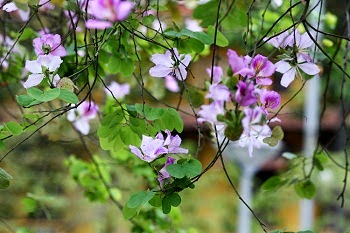
Visiting the Northwest in March you will see a whole forest of white mountain-ebony flowers. Mountain-ebony flowers are as shy and humble as young women, which only bloom after peach and plum blossoms have faded.
The beautiful and fragile flowers can be processed to become tasty and attractive dishes. Usually local ethnic Thai women pick mountain-ebony flowers to cook or to sell in the market as fresh vegetables.
Mountain-ebony flowers can be fried with bitter bamboo shoots. The taste of this dish is the bitterness of bamboo shoot and the sweet and fleshy taste of mountain-ebony.
The Thai women also mix mountain-ebony flowers with minced meat and spices to stuff fish. They also use the flower to make soup, salad or to fry with pork, etc.

2 . Fragrant cynanthe

Special dishes made from flowers2

In the summer, fragrant cynanthe flowers bloom, with a cool fragrance. The flower is also a nutritious food, with a cooling effect.
Fragrant cynanthe flowers can be used to cook many dishes such as lobster soup, fish soup or fried with other foods such as beef, seafood, chicken, etc. But the  most simple dish from this flower is Fragrant cynanthe flower with crab.

3. So dua flowers

Special dishes made from flowers3

For people in southern Vietnam, this species of flower can be used in a lot of dishes. The white or purple flowers, which usually bloom from October to December, can be ornamental plants or vegetables.
In a season of so dua flowers, people often pick fresh flowers from early morning to process into soups with snakehead fish, shrimp or sour soup.
More simply, the flower is often boiled and served with mam kho quet (a special sauce), which is the favorite of many people in summer.

4. Squash flowers

Special dishes made from flowers4

Many people only know dishes that are made from pumpkin or squash but few know that pumpkin and squash flowers are also a very tasty dish. The flowers are usually used in soup or fried with pork and beef and even steamed. The simplest preparation is boiling the flowers and serving with fish sauce.

5. Dien dien flowers

Special dishes made from flowers5

Each year in the flood season, the southern people pick dien dien flowers from the field or canals to cook soup or make salad.

Source: Pha Le - VNS

Hanoi’s coffee culture, like no other

By  
Sai Gon has coffee on high floor, and under ground, etc., where as Hanoi has street coffee and traditional cafeteria. The competition between Trung Nguyen coffee system, modern Cappuccino coffee and traditional coffee is still equal. This reveals that the Hanoians retain some uniqueness of their ancient lifestyle.

Coffee and the Hanoians

The Hanoians drink a lot of the dark, caffeinated beverage and prefer sipping their stronger blends outside in front of a small shop with some sweet milk and a spoonful of sugar. Every morning, on hot days of summer and cold and dull days of winter, you can easily see some here with a cup of coffee in one hand and a newspaper in the other.

For many Hanoians, the most important factor of a café is not its luxuriousness but the quality of the product. Old people love cafés which have been around a long time, located on old streets or inside deep alleys. Office workers like cafes with romantic and quiet styles like those in Pho Co Quarter. Young people prefer the noisy and busy atmosphere of modern and luxury or pavement cafés.

Street Coffee…

Soaking up the rhythms of the street and embracing Hanoi from all of its sides, from old to new ones, and from traditional to modern & quirky ones, you will tenderly recognize that, nothing can be better refresh us after hardworking hours than a cup of coffee on a street near Sword Lake (Hoan Kiem Lake).

Basking with sunshine in the afternoon when there’s less noise from automobiles, Hanoi ends a day and opens a new paradise for culture experiences. Taking over a legacy from bygone years with the involvement of an irresistible French factor, the Vietnamese have embraced café culture in a great way. There are so many famous coffee shops in Hanoi, like Nang café (6 Hang Bac), Nhan (39D1 Hang Hanh), Quat (Quan Thanh), Quynh (Bat Dan) to Giang (Hang Gai and Lam (60, 91 Nguyen Huu Huan)… Chairs are small, literally child-sized, and are sometimes made of blue plastic or painted wood. The tables are covered with glasses of ca phe den (black coffee) or ca phe sua da (iced coffee), which come with their own picturesque drip top. Not only just for connoisseurs,  these places are idea for having gossip, meeting old friends, talking to pass  time of day, stealing precious moments for romantics …

Now, let’s follow a coffee connoisseur…

A good example of the authentic Hanoi cafés is Hang Hanh, an atmospheric slender street veering off the city’s central Hoan Kiem Lake. In the afternoon, one may find himself inexplicably drawn to its’ wall-to-wall cafés which unfold below the shady boughs of leafy trees. Here, the annoying young and cool Vietnamese often sit and watch the world in front of their eyes. In late afternoon, with the last rays of sunshine, the place starts to buzz. At weekends, it is positively heaving with dating couples or gangs of youths desiring to be couples.

If this sounds too frenetic, a more subdued place like Giang Café can be chosen! Though situated in a busy tourist shopping street, the tiny confined Giang Café attracts the serious permanent coffee lovers and soccer addicts. 

Cyclo cafe in Hanoi

My next stop is Lam café - the perfect refuge for artists, poets and thespians to refresh their minds for creativeness. Situated on a shaded street, it will bring you the relaxed moments by the simple but artistically-decorated bamboo furniture, colorful framed oil paintings on the wall, ceiling fans as well as wooden table with a lot of tiny china teapots.

Yet, if you ask me about my favorite one, I will not hesitate to answer that it is Quynh Café. Down in a quiet side street, this unassuming cafes’ entrance is marked by a simple red lantern and ornate ironwork doors. Stepping inside, you not only see the bamboo furniture on tiled floor but also the tiny plants adorn wooden shuttered windows. Looking on damp-streaked walls, you may surprise with wooden arrows and trumpets, farming implements and ancient hunting pistols. Breathing the cool air from the antiquated table-fan, wallowing in soft French background music, you will desire to stay longer...

Coffee drinking from another approach

The resurgence of tourism to these fragrant shores has led to the resurrection of the wonderful old ambience of former colonial times in many Hanoi cafés. Delightful cafés are now housed in elegant French-style villas with exquisite silk prints, meticulously polished wooden floors and pot-planted courtyards or serve delicious food all day and evening. Street cafés like the La Terrasse du Metropole on Ngo Quyen and Le Phung Hieu or Highlands Café, 84 Nguyen Du are the typical examples!

Hanoi’s coffee culture calls on coffee addicts from every corner of the globe!

Bottoms up!

By  

In Hanoi, you can find the simplest corner bar on Earth with tiny plastic stools on the sidewalk, small tables on the ground, laden with glasses of beer. Come to Vietnam to try Vietnamese beer and see how men drink beer with favorite refrain such as “tram phan tram” (100 percent), "drain your glass of every drop”…

Bia hoi (draught beer) is one of things you should not be missed when you come to Hanoi. There are plenty of local as well as imported beer brands in Hanoi such as 333, Carlsberg, Hanoi, Tiger, Saigon, LaRue, San Miguel and Heineken. However, bia hoi is the most popular beverage throughout the country and the cheapest beer in the world (2,000 VND for a glass only). It accounts for more than 30% of total beer consumption in the country. Of course, it is an unpasteurized beer with low alcohol content (approx. 3%) that is sold in mugs in simple street restaurants. Bia hoi is an integral part of the North Vietnamese beer culture. Typically, most male beer consumers drink it at least 4-5 times a week during peak season.

As a developing nation, Vietnam's per capita beer consumption remains relatively low at roughly 12 liters a year, especially compared with such giants of the suds-swilling world as Germany, which consumes more than 120 liters per person per year. Nevertheless, Vietnamese tend to drink beer in large quantities. Yes, that is true! It is not uncommon to see a group of four or five men with 24 empty bottles on their table at lunchtime. Humorously speaking, as well as their drinking capacity increase, their business prospects seem to be bright.

That the reason why Vietnam’s bottled-beer market has been enjoying double-digit growth for several years. Upscale brew pubs are also starting to crop up with more than a dozen opening in Hanoi in the last year. “This is a very interesting industry - a rapidly growing industry” said Van Dinh who opened a brew pub in a Hanoi discotheque last year.

When opening Red Beer brand (or Bia Do) in Hanoi a year ago, Truong Viet Binh expected to sell about 200 liters a day. Now, he's selling 300 to 400 daily and planning to open a new Bia Do in Ho Chi Minh City where at least four brew pubs already have been opened

Despite all the changes in Vietnam's beer industry, the most popular drinking establishment remains the traditional bia hoi. These ubiquitous establishments are always on the sidewalk where customers sometimes will raise their voices over the din of motorbike traffic or the clouds of diesel belch over the plastic tables from a passing bus. The customers have no need for the sleek furniture and fancy entertainment that they might find in a brew pub.

Nobody minds if the tables are dirty and the sidewalk is littered with paper napkins. This is simply the place where everyone comes to unwind - from truck drivers returning from a stressful shift to college professors who use bia hoi as a sort of street-side salon. “We come here twice a day” said Le Vinh, 67 years old, sitting at a bia hoi in the shadow of the central Hanoi train station. As a retired doctor, Vinh's drinking pals include a retired soccer star, a film maker, an engineer and finally, a newspaper photographer. They gather for an hour or two at lunch and, of course, reconvene at the end of the day. “We share our ups and downs” said Nguyen Trinh Thai, a painter.

At Bia hoi Viet Ha - a humble stall just down the Lang Ha Street, five friends are gathering after a hard day at a Hanoi print shop. They have come to this place four times a week for six years now. They suck down eight glasses right after sitting, but claim they are sober. “If we come home drunk, our wives will be furious” as one of them explained.  “If we have less than eight glasses, we are fine,” said Pham Tien Anh, 55 year olds, while picking at a plate of fried tofu with his chopsticks. “Chuc suc khoe!” they cheered and ordered another toast “Here's to your health!”

Vietnam has a unique beer culture, said Nguyen Hong Linh director of planning for Hanoi Beer, which has recently doubled its production capacity. “When people go to a bia hoi, it will promise a special atmosphere,” Linh said. “Everybody is very happy. That’s all!

Now, wondering on a certain Street in Ha Noi, you can accidentally hear the sentence “Bottoms up!” and question yourself “what is the only thing that will make these men forget their wives and their homes?” The answer is “beer only”!

"One cup of tea, please!"

By  
... is what you often here when walking along Hanoi streets, near a lamp post, under the shade of a tree, or next to a door where there is a low table with glass pots containing different kinds of candies, roasted ground nuts, and sugar coated cakes. This is a complete description of a make-shift tea shop, which is a very popular part of Vietnamese street life.

The owner skillfully lifts the cap of the tea cozy, takes out the tea pot, and then pours the hot tea into a small cup. The owner then hands the cup of steaming tea to the customer. Unlike northerners, who prefer hot steamy tea, people in the south would like to add ice cubes to their tea cups/glasses due to weather difference.

Tea drinking - an indispensable habit.

Vietnamese people have a nice habit of drinking tea. They drink it everywhere and at any time: at home, at workplaces, even in tea shops on their way to work, or at formal meetings, weddings or funerals. They also place it on altars as an offering to their ancestors on worshipping occasions. Whenever the locals feel thirsty, they are likely to look for this drink, in both summer and winter. A cup of iced tea in a hot day in summer not only refreshes your mind but also detoxicate your body. On the contrary, in winter, a sip of hot tea makes you feel warm inside and better able to cope with the outside cold temperatures.

Yet, tea drinking is not a recent trend in Viet Nam but attached to an ancient history as follows;

Tea drinking - from history to daily life...

Viet Nam is one of the largest and oldest tea-producing countries in the world. The Vietnamese have been growing tea for over 2,000 years. As early as in the 11th century, tea was used as a symbol to convey the essence of Buddhism. During the period of the Tran Dynasty from the 13th to early 15th century, tea assumed a philosophical value for the Vietnamese. In the 15th century, the Vietnamese polymath Nguyen Trai (1380-1442) lived as a hermit, renouncing the outside world for a life of "tea, poetry and the moon".

While tea has a special philosophical value for scholars and a long tradition in Vietnamese history, it has its own place today in the life of ordinary people living both in the cities and in the countryside. In the past, peasants could not afford expensive tea, so they grew tea on their own. Nowadays, tea is used to bind people together, for example, the peasant often invites his neighbor around for a chat over a cup of tea. They drink tea initially to thank the host for his hospitality, then throughout several tea sips, they open  heart more, to share their feelings, to speak about the family, the company and finally to feel the nature savor of the cup of tea.

Besides a normal thirst-quenching beverage, tea is also considered a delicate and meaningful one. In the past, it used to be the leverage for poets’ inspiration. Up to now, the habit of leisure tea-drinking has helped refresh and polish the drinkers’ minds. Moreover, a person's character can be assessed by his or her tea drinking ways. Vietnamese people consider those who drink concentrated tea to be finely-mannered; and those who can pour tea into bowls arranged in a circle using a coconut scoop without spilling a drop will certainly enjoy the admiration of their tea-drinking peers.

Kinds of tea

Viet Nam has grown many and various types of tea such as che Tuyet, che Moc cau, che man, che chi … Each one is combined with a particular kind of flower: che man with chrysanthemum; che bup with hoa soi flowers; high quality che man and che bup with lotus, narcissus or jasmine. Some connoisseurs go so far as to row out to the middle of a pond to place small amounts of tea inside lotus buds in order to perfume it. An example is cum tea, grown by the Tay ethnic minority. Cum tea plants are allowed to grow until the buds are mature, then they are picked, and roasted in a pan until they are dry and the buds begin to curl up. The tea is then wrapped up in palm leaves to keep it fragrant.

The Vietnamese like to mix tea with flowers to make it more aromatic. Tea with lotus is very precious for Vietnamese people. This kind of tea was formerly reserved to the Kings. According to the predecessors, when the lotus blossoms in the afternoon, they put a sachet of tea in the pistil and then, they tighten it with the sheets of lotus. In the next morning, they take dew remained on the sheets and in mixture with the sachet of tea in the pistil. After having poured into the cup, the soft and fresh odor of lotus dominates the whole room.

The tea culture has sticked to the life and the heart of Vietnamese people for generations. And when they drink tea at a small mouthful, the tea savor makes them more off-hand and closer to one another. This has formed the culture of the vicinity and the affection between neighbors.

Nuoc mia, or sugar-cane juice

By  
Sugar-cane juice is a type of drink commonly found in Vietnam as a refreshing drink during the hot Vietnamese climate.

In the hot weather like Vietnam, people know sugar-cane juice as a natural beverage that is delicious and cheap. Therefore, sugar-cane juice is so popular in Vietnam and is available at most small street stalls, often sold alongside other popular beverages. The juice is served from distinctive metal carts with a crank-powered sugar cane stalk crushers that release the juice.

There used to be a vendor that would make freshly squeezed sugar-cane juice. Previously, sugar-cane juice was sold in small plastic bags filled with ice and tied at the open end with an elastic band around a straw. Buyers could then suck the drink out through the straw. There has been movement to selling sugar cane-juice in white foam cups and it’s got a slight lime taste to it as commonly seen in Vietnam today.

Moreover, at the present, there is a system of 20 high quality sugar-cane juice stores named Fruit Shake has  been occurred in Hanoi and Ho Chi Minh City. After March 2007, There appears a lot of super-clear sugar-cane juice stores  with price from 7000VND-8000VND (about 0.5 USD). Sugar-cane juice in Fruit Shake with many flavors becomes a high-class beverage in Vietnam.

Now, you can feel free to enjoy a glass of sugar-cane juice (considered the second best drink in the world after the orange juice) and you do not have to worry whether it meet the standard of food safety or not.

Vietnamese wine

By  
When we say that Vietnam is warming with reds these days, we aren't making a political statement, of course. We're talking about wine. With the easing of government restrictions, both commercial and cultural, the past ten years have seen a welcome increase in wine importing and awareness. You can now find a good quality Bordeaux in most upscale and many mid-range restaurants or chic wine bars and shops in Hanoi and Ho Chi Minh City. Nevertheless, while international wines are making headway, the most interesting vintner we find on the market are local contenders.

Rice alcohol. Alcohol has been called spirit because it symbolizes for men willingness in the old time. Besides tea, plain rice alcohol is also offered respectfully on the ancestor altar in rituals or ceremonies to show deep gratitude such as wedding parties, ground - breaking, Tet holiday... Vietnamese also drink alcohol to celebrate joy to reduce sadness or wish for blessings.

However, the way Vietnamese drink alcohol is worth mentioning. Unlike Western countries where bigger cups or glasses are frequently used, buffalo - eyed cup is more preferred to serve in Vietnam.

How can rice become wine?

Yes, Vietnamese alcohol is made from rice so it is called rice alcohol. Firstly, rice is steamed, and then fermented for a couple of days before being distilled. With several traditional methods and materials, you will have many kinds of rice alcohol; however, their flavors are totally different from each other. In some cases, herbs or snakes are pickled in alcohol jar to use as medicine.
Can wine. The name can wine comes from the reason that Vietnamese call a stem - a small bamboo straw- to consume wine from the jar. This kind of wine is the most special one in Vietnam even it belongs to minority groups in highland and some other places in Vietnam.

Can wine is special for the way it is made and served.
Firstly, simple available local materials such as cassava, tapioca, sweet potato are altogether fermented by wild herb in a pottery jar for days. Of course, its taste is total different from rice alcohol or any kind of wine - can wine is so bitter or strong that may lead you dizziness. Its sweet taste would make you drunk - a sweet and slow drunk - without any predictable consciousness.

The way can wine is served clearly shows the community unity and hospitality of highlanders. Now, let’s see how Vietnamese drink ruou can to serve dear guests, special celebrations or ceremonies. At these moments, the spirit container would be fixedly placed in the middle of the yard, house or even communal long house (called nha rong - in central highland). Then, both host and guest take seats around while fresh water from a buffalo horn will be slowly leaked out through a small holed. Now, it should be time for the village master to try through one of stems dipped into the jar. In some cases, he can offer it to honorable guests. After that, turns will come to the rest whenever they want. Every body will try to offer stems to each other to show their willingness and respect. The container would never be dry, it always requires fully filled with water by ladies. Besides, there would be gong performance, which is usually accompanied by dancing during the time.
Snake Wine. It is an alcoholic beverage that can be found at Snake Village near Hanoi, any major city of Vietnam as well as other countries across South East Asia. The snakes are immersed in 100% rice wine in special glass bottles and then, they are sealed and stored in a cellar for five years. The wines which contain substances necessary for the human body are high quality tonics. Regularly drinking appropriate quantities of the wines can moisturize your skin, improve your appetite, as well as strengthen your bones, tendons and muscles. They are used to treat general fatigue, hair loss, migraine headaches, rheumatism and neurasthenia. Surprisingly, the tonic wines do not cause dryness syndrome, such as constipation, thirst, dryness of the throat and nose. People of all ages and both sexes, including pregnant women can drink them in four seasons.

Vang Da Lat. As with most other Asian countries, wine is not the first commodity that comes to mind when thinking about Vietnam. However, Dalat, with its cool central highland climate and strong French heritage, is an anomaly that producing artichokes, asparagus, strawberries and most recently- wine.

Unlike its more sophisticated brethren in France, Northern California and South Africa, Vang Dalat uses table grapes from nearby Phan Rang - a Vietnam's main grape-growing region. Nguyen Van Viet who has been with his wine company since 1999 explains that Vietnam has a limited history with wine. The French introduced an elite wine culture pre-1954, and during the past decade, due to the improvement in living standards, more people fond of traveling overseas and being exposed to foreign wines.

With this in mind, Nguyen considered how Vang Dalat could produce a European-style wine similar to traditional Vietnamese wines that any family could afford. Today, his company produces 1.5 million liters of wine a year, including a Superior Red (all grape, 11% alcohol), Strong Red (grape/mulberry blend, 16% alcohol) and even a sparkling white…

In the meantime, Vang Dalat is just one more good reason to Visit Vietnam. If you make it to Dalat, we recommend dinner at Maison Long Hoa, a genteel establishment run by a Vietnamese Francophile. Classical rather than tinny pop plays over the stereo, hearty Vietnamese food offers comfort against the chill outside, and—along with the strawberry wine made by the owner's wife—Vang Dalat vintages top the wine list.

“Chè” - Vietnamese Sweetened Porridge

By  
"Chè” is a Vietnamese term that refers to any traditional Vietnamese thick, sweet dessert soup or sweetened porridge. Sweetened porridge is a kind of sugary flavored beverage which is protein-rich.

As such, it may, with the addition of qualifying adjectives, refer to a wide variety of distinct soups or puddings, which may be served either hot or cold. Some varieties, such as “chè xôi nước”, may also include dumplings.

Chè are often prepared with one of a number of varieties of beans and/or glutinous rice, cooked in water and sweetened with sugar. Other ingredients may include tapioca starch, salt, and pandan leaf extract. Each variety of chè is designated by a descriptive word or phrase that follows the word chè, such as chè đậu đỏ (red bean sweetened porridge), chè đậu đen (black bean sweetened porridge) and so on.

In southern Vietnam, chè are often garnished with coconut milk. Chè may be made at home, but are also commonly available freshly made in plastic containers, in Vietnamese grocery stores. If you would like to prepare yourself, you could use the following recipe to cook Taro Sweetened Porridge, a kind of very delicious one.

Ingredients:

- 0.4 kg taro.

- 0.25 kg sticky rice.

- 0.5 kg caster sugar.

- 0.3 kg grated coconut flesh.

- 1/2 liter water.

- 1/2 teaspoon salt.

- vanilla.

Equipment:

- Bowl, plate and spoon.

- Pot and stove.

- Filter.

- Grater.


Preparation Steps:

1. Wash and drain sticky rice.

2. Wash and cook taro until well done.  Peel and dice taro.

3. Grate coconut flesh into a bowl to extract coconut milk with water (0.5liter).  Add 0.5 liters of water to extract coconut flesh for the second time.

4. Boil the second coconut juice and add the sticky rice. Continue to cook until well done.  Allow water to evaporate.

5. Add diced taro and sugar to the mixture.  Simmer for about 20 minutes then stir the  mixture constantly to avoid  sticking to the bottom of the pan.  Stop cooking and add vanilla.  Stir regularly for about 10 minutes.  Remove from heat when the water has evaporated. Taro sweetened porridge should be thick and consistent.

6. Serve hot or cold  with the first coconut  juice.

Recommendations: When  sweetened porridge is cooked, make sure the grains do not lose their shape.

Then, you together with your family members can enjoy bowls of Taro Sweetened Porridge. So delicious!

Tea with longan and lotus seed

By  
Tea with longan and lotus seed is considered as the Vietnamese quintessence...


With longan and lotus seeds, the Vietnamese can create a kind of special-flavor tea. It is considered the quintessence of the heaven and earth. The tea is aromatically fragrant with an original flavor.

Containing longan fruit pieces and lotus seeds, this kind of tea is fragrant with a full-bodied taste. The original and naturally flavored beverage is rich in glucose, sucrose, proteins, and other minerals. Longan flesh is sweet and contains niacin, which aids metabolism and keeps the skin, nervous, and digestive systems healthy. Lotus seeds can treat nervous depression and sleeplessness.

Longan and lotus tea is a nourishing drink with natural sweetness. When both of the ingredients combined, it is effective in fighting against anemia and fatigue, and boosting energy levels. Or in other words, they are good in building blood and regenerating Qi. It has a pleasant taste and high nutritional value, and is recognized as valuable medicinal herb.

The flavoured tea is tasty and refreshing; and can easily satisfy your thirst as well as refresh your minds. The rich composition of natural nutrient factors entails the tea with healthy characters, which makes you keep up your spirits among the clean, free and happy mood. If you would like to make a cup of the flavoured tea yourself, you are able to try the simple direction as follows:

Ingredients:

12 lotus seeds, washed and cooked

10 longan fruit pieces, pitted

5 cups of water

Method:

1. Boil and simmer ingredients in 5 cups of water for 45 minutes until the liquid is fragrant and tasty.

2. Serve warm.

When you are in Vietnam, this kind of tea should be a must try of Vietnamese local product. The taste is excellent and it is a health drink. It could help ease sleep problem if you drink a cup of longan and lotus tea before going to bed.

Food Heaven in Vietnam

By  
So far in all our travels, Vietnam has come out on top as our favourite foodie places, so we’ve decided to share some of our best Vietnamese culinary experiences with all of you!  Enjoy looking at these pictures and apologies in advance if we make you hungry!

First up the most famous dish of Vietnam, ‘Pho Bo’ (noodle soup with beef). We had many bowls of this on our journey North to South of Vietnam, but this one from Nha Trang was the best!  They don’t always add in extra vegetables such as tomato and this made it even tastier!
 

The Vietnamese do all kinds of fish very well, but we particularly loved this steamed coconut shrimp in banana leaves – yum!

Like the Pho soup, the spring rolls varied slightly from one city to the next as we travelled through Vietnam.  We particularly loved the Hoi An spring rolls….and served with cold beer made them even tastier!

‘Cao Lau’ is a local speciality in Hoi An and consisted of doughy flat noodles mixed with croutons, bean sprouts and herbs topped with pork slices and served in a savoury broth.

As I was not so keen on the pork Cau Lao above, I was delighted to find another version of this local speciality served with shrimp instead of pork – very tasty indeed!

These little parcels were another local delight of Hoi An called ‘banh bao’ consisting of steamed dumplings stuffed with minced shrimp topped with crispy fried garlic.  They made a lovely starter!

Now for a speciality from Sapa in North Vietnam – ‘Bo Nuong La Lot’ (Vietnamese Grilled Beef with Wild Betel Leaves), a delicious twist on the traditional spring roll.

As you’ve probably gathered by now, healthy soup is very popular in Vietnam and we particularly loved this Vegetable noodle soup served up as part of our Sapa trekking experience!

Whilst in Sapa, we also had the opportunity to taste some real home cooked food during our homestay with a local family from the Hmong village. They served up these delicious stir fry dishes with chicken and pork, and of course the usual favourite of spring rolls (which I helped to make!) Check out more about this in my post Trekking in Sapa, Vietnam.

Another great meal served up in Hanoi pictured below. The dish in the middle is the famous Vietnamese papaya salad served with horseradish, cabbage and carrot vinegar topped with cashews.

Being savoury lovers, we didn’t try too many deserts in Vietnam but this desert soup was particularly tasty consisting of deep fried banana in sweet coconut milk with tapioca pearls and jelly shavings.
 

This is the inside of the famous ‘banh bao’ fresh white pancake stuffed with delicious marinated minced shrimp – oh how I miss Vietnamese food!
 

This delightful plate consisted of minced chicken skewers grilled over fresh lemongrass. Simply peel the chicken off, roll it into fresh pancakes stuff with noodles, cucumber, fresh lettuce and herbs and peanut sauce – a fab combo!

Not only did these vegetable springs taste good, but they were probably the biggest portion we had!

We couldn’t finish this picture post without also displaying my favourite Vietnamese chicken noodle soup, the ‘Pho Ga’.  This became our hearty and healthy breakfast of choice and we are certainly going to try and recreate it when we get home!

Source: http://www.worldlynomads.com